published on
Striking the Right Balance: Navigating the Security vs Usability Dilemma

How Does Security Impact Business Outcomes?
Business success greatly depends on the usability of a product or service. Putting it mathematically:
Business Outcomes = f (Usability)
The link between a product’s usability and business success is clear. User-friendly products attract more customers, enhancing business outcomes. Product ease of use is pivotal in shaping customer experiences and loyalty. Thus, prioritizing usability is essential for businesses to maintain a competitive edge and ensure customer satisfaction.
Businesses must prioritize robust data protection measures to succeed in today’s digital age. High-quality data protection is essential to maintain operational integrity and customer loyalty. A sound data security system makes customers feel safe by securing their personal and financial information from hackers. By implementing effective data security measures, businesses can attract and retain customers, build customer trust, and protect sensitive information.
Companies that prioritize and invest in comprehensive data security strategies mitigate the risks of data theft and compliance penalties and enhance their market competitiveness. Businesses can achieve growth, customer satisfaction, and success by prioritizing data protection as a strategic focus for their operations. This emphasizes the indispensable role of data security in shaping positive business outcomes.
Security gaps can lead to data breaches and regulatory non-compliance, with significant consequences, such as:
- Fines and penalties
- Business disruptions
- Lost revenue
- Decreased usability
- Reputational damage
Each of these outcomes can significantly undermine the stability and growth of a business, emphasizing the critical need for a robust data security strategy that is comprehensive and adaptive to the evolving landscape of cyber threats.
This also proves that:
Business Outcomes = f (Security)
Which means,
Business Outcomes = f (Security, Usability)
Therefore, businesses must conduct a thorough analysis to ensure data security aligns with their objectives.
If Business Outcomes = f (Security, Usability), Why Choose Between Usability & Security?
Data security solutions can be too complex and disrupt business processes by making users follow too many steps. This creates a difficult choice for organizations between usability and security.
When a company purchases a data security solution, it typically proves effective initially. This occurs because either the users are motivated or the Information Security team actively implements it. Companies promote these solutions as scalable enterprise applications, but users face more challenges as they move beyond early adopters.
Case Study: Global Commodities Trading Corp
A company we helped had to use a unique email system that makes senders create passwords for essential emails. They would then share the password with the receiver, who would use it to open the emails. At first, the team working with auditors used this solution and sent 4 to 5 weekly emails. The auditor-interfacing team used the solution smoothly.

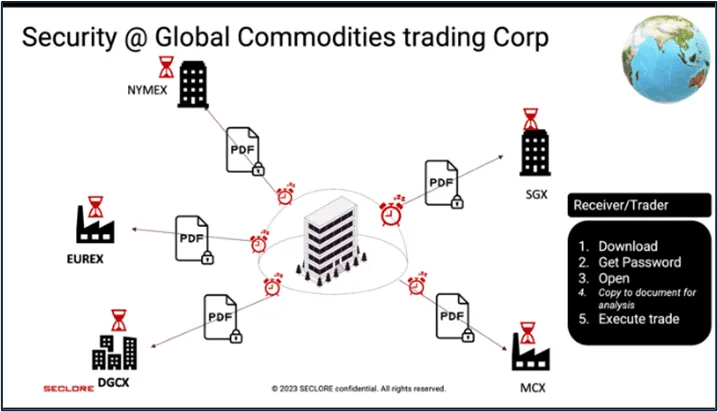
The trading team at this firm exchanged these time-sensitive confidential emails and found them effective. As a result, the team decided to adopt this email encryption solution to prevent IP leakage.
After a few days, the business team realized it took them five times longer to send and receive emails. This has been happening ever since they joined this team. Considering the time-sensitive nature of their work, this started affecting their usability.
Once, the Management Information Systems (MIS) team told traders to make a trade at 3:30 pm, which was in the next 5 minutes. The MIS team chose to disregard security guidelines to achieve their business goals. They were aware that complying with the guidelines would impact the deal.

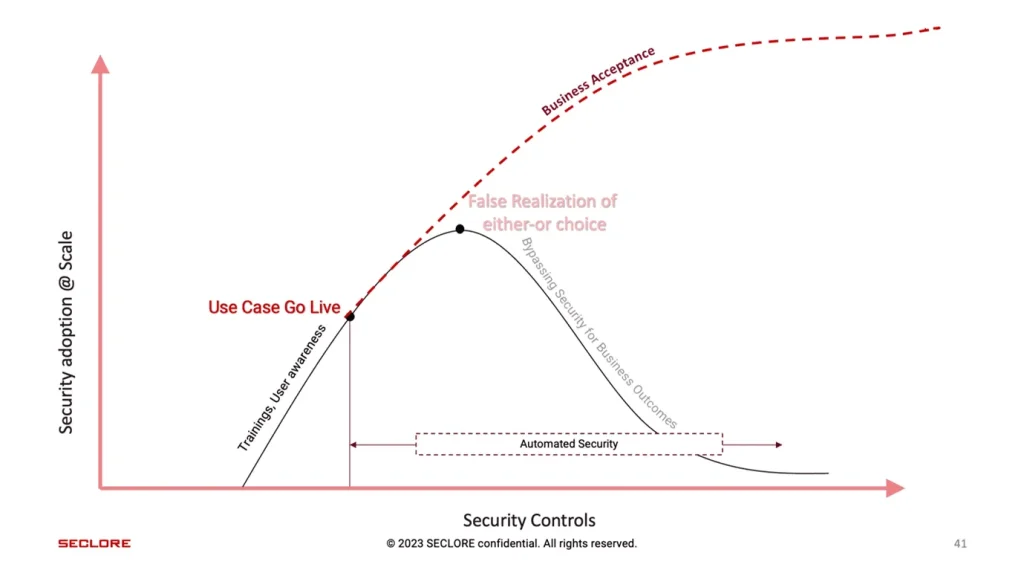
False Sense of Either-or-Choice
At a certain point of scalability, the organization must automatically choose productivity over security. This term is known as a “false sense of either-or choice.”

The company had to choose between security and usability because of the email encryption tool they were using. The tool made it difficult to balance both aspects, so they had to make a tough decision.
Avoiding This False Sense of Either-or Choice
Organizations can avoid choosing between usability and security by selecting a data security solution that minimizes user involvement in the user experience. Most security solutions negatively impact usability or business solutions when added on top of them. A security system with automation can decrease the interaction users need, making it more straightforward for users to focus on security and usability.
As long as it happens behind the scenes – the business user does not care!
Enter Seclore
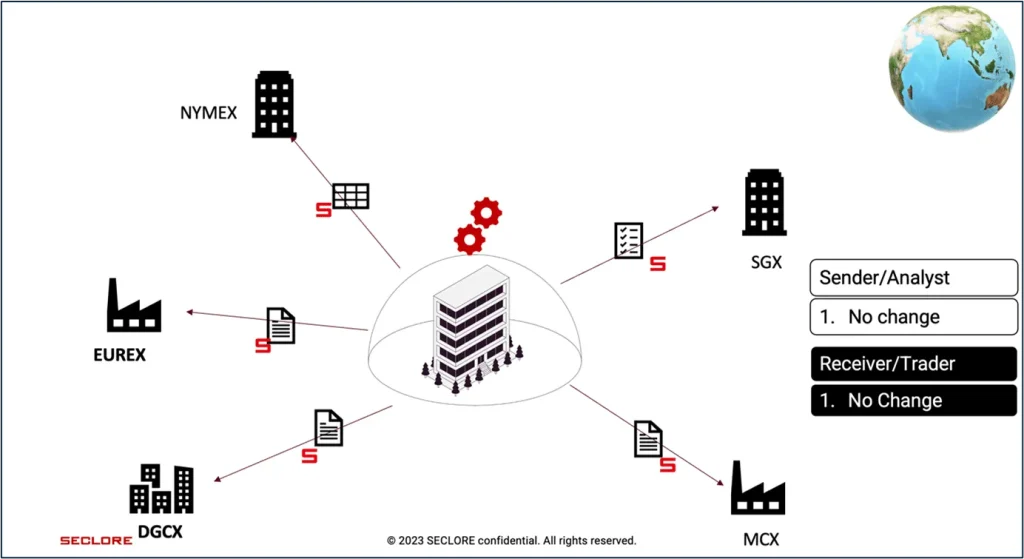
The global commodities trading corporation switched to Seclore for email security, replacing their old solution because of concerns about usability and security. Seclore’s data-centric security solution allows organizations to establish rules based on the sensitivity of content. These rules help to automatically apply appropriate levels of security for recipients accessing sensitive emails.
As a result of using Seclore, the business user didn’t need to remember to encrypt emails or share a password manually. Neither the sender’s nor the recipient’s experience changed.
Summarizing Insights: Toward a Unified Understanding
The effectiveness of the security solution lies in NOT forcing the business users to choose between security and usability, because we already know what choice they will make.
Security and usability are no longer mutually exclusive choices for an organization, as long as the solution:
- Automates security and does not add friction to user efforts
- Aligns with business goals and does not break workflows