
What Is Shadow AI? Detection, Risks, and Governance
What shadow AI is, what it exposes, and why masking beats blocking
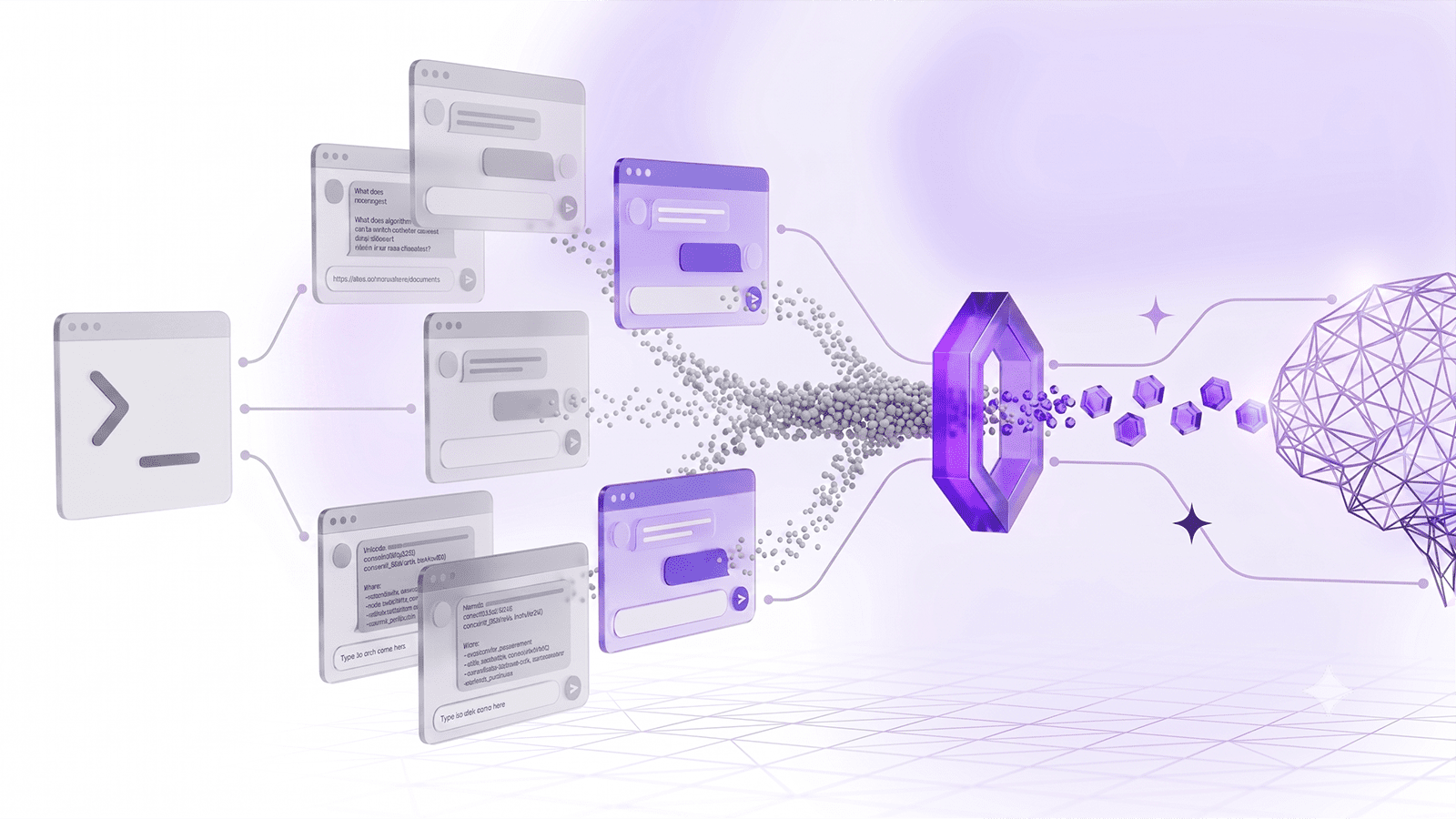
Shadow AI is the use of AI tools, models, and applications inside an organization without the knowledge or approval of IT and security teams. It includes employees pasting company data into public chatbots, teams connecting unsanctioned AI apps to business systems, and developers embedding AI models in internal tools without review. The name echoes shadow IT, but the risk profile is different: shadow AI moves your data into systems that may retain it, train on it, and reproduce it somewhere you cannot see.
The debate over whether to allow AI in the enterprise is over. Employees settled it. They are using ChatGPT, Claude, and Gemini with your customer data, your financial records, and your IP, right now, without asking. The only question that matters is whether any of it is protected before it reaches the model.
How common is shadow AI?
More common than most security programs assume. Three numbers describe the situation:
- Roughly 1 in 12 employee prompts to public AI tools (8.5%) contains sensitive data, according to Harmonic Security’s 2025 analysis.
- 69% of organizations suspect or have direct evidence that employees are using prohibited generative AI tools, per a 2025 Gartner survey.
- 68% of workers who use AI at work hide that usage from their employers, according to Teramind research.
The pattern is consistent across industries. Employees adopt AI because it makes them faster. They do not route the decision through IT because approval is slow and the tools are one browser tab away. Sensitive data follows.
What are the risks of shadow AI?
Data leakage into model context windows. Every prompt, pasted document, and uploaded file enters the context window of a model the enterprise does not control. Consumer AI tools may retain that data, use it for training, or expose it through account compromise. Once submitted, the data is outside every control you own.
No audit trail. When a regulator, board, or customer asks what data has been shared with AI systems, an organization with shadow AI cannot answer. There is no log of prompts, no record of which documents were shared, and no way to demonstrate that regulated data stayed inside its required jurisdiction.
Compliance exposure. GDPR, HIPAA, India’s DPDP Act, and Saudi Arabia’s PDPL all restrict where personal and regulated data can go and require evidence of control. An employee pasting patient records or customer PII into a public chatbot can create a reportable incident that nobody knows happened.
Compounding invisibility. Shadow AI rarely stays at the chatbot stage. Teams build on it: browser extensions, unsanctioned SaaS with embedded AI, internal scripts calling model APIs. Each layer moves more data with less visibility. This is the same blind spot that gives shadow data its risk profile, extended to the fastest-growing data flow in the enterprise. See data security posture management for the repository side of the problem.
How do you detect shadow AI?
Detection works in layers. No single control sees everything.
1. Network and DNS telemetry. Traffic to known AI endpoints (OpenAI, Anthropic, Google AI, and hundreds of smaller tools) shows which AI services employees reach and how often. This is the fastest first census. It tells you volume, not content.
2. SaaS and identity audits. OAuth grants and SSO logs reveal AI apps connected to corporate accounts, including AI features switched on inside sanctioned SaaS. Many “approved” platforms added AI processing that nobody re-reviewed.
3. Endpoint and browser visibility. Browser extensions and copied-in prompts bypass network categorization. Endpoint telemetry catches AI use that DNS misses, including desktop AI apps.
4. Data-level discovery. The layers above show that AI is being used. They do not show what data went in. Data-level visibility means seeing the prompts, documents, and data flows themselves, which is where data security posture management and AI-aware controls take over from network monitoring.
A useful sequencing rule: measure first, govern second. Organizations that start by blocking AI endpoints usually discover they have simply pushed usage to personal devices and home networks, where visibility drops to zero.
Why blocking shadow AI fails
The instinctive response to shadow AI is prohibition: block the endpoints, publish a policy, discipline violations. It fails for a predictable reason. AI tools make employees measurably faster, and employees route around controls that slow them down. Blocking does not stop the usage. It stops the visibility.
Shadow AI is not a behavior to stop. It is a data flow to protect.
That reframe changes the goal. The question stops being “how do we prevent employees from using AI” and becomes “how do we make the AI they already use safe.” Safe means private, sovereign, resident, and secure: sensitive values stay inside the enterprise, data stays in its required jurisdiction, and every interaction leaves an audit trail.
Shadow AI governance: masking instead of blocking
The governance model that works treats AI interactions the way mature security programs treat any other data flow: allow it, protect it, and log it.
Protect the interaction. The control point is the interaction layer: the boundary between users, applications, and agents on one side and the context windows of AI models on the other. Sensitive values get identified in real time and masked with tokens before the data reaches any model. Done well, the tokens preserve context, so the AI can still reason over the input while the real values never leave the enterprise. The practical effect: an employee pastes a customer contract into a chatbot, the AI answers the question, and the customer’s actual identifiers never left the building. Productivity stays. Exposure goes. Blocking stays available for cases that need a full stop, but masking is the better default, because it preserves the reason employees adopted AI in the first place.
Govern with evidence. Every prompt, query, document shared, and model called gets logged. Shadow AI stops being an unknown and becomes a reportable metric: which teams use which models, what categories of data were masked, and proof of protection when a regulator asks. This visibility is also how new AI Risk and Governance roles, a title now appearing across major banks, get the data their job requires.
Cover both kinds of AI. Shadow AI includes the AI your employees use and the AI your teams build. Protection has to apply at both entry points: at the browser for employee access to public AI tools, and at the pipeline level for internal applications and RAG systems. Why DSPM must evolve for the AI era covers how discovery feeds this protection layer.
How Seclore does this
ARMOR AI-DLP sits at the interaction layer and masks sensitive data using tokenized data values before it reaches any model, whether that is ChatGPT, Gemini, and Claude through a portal employees use directly, or internal AI applications and RAG pipelines through an API. The AI receives context-preserving tokenized values it can reason over fully; real values remain secured within the enterprise environment, and masking is reversible for authorized users. Every interaction is logged.
Frequently asked questions
What is shadow AI?
Shadow AI is the use of AI tools, models, or AI-enabled applications within an organization without the knowledge or approval of IT and security teams. Common forms include employees using public chatbots with company data, unsanctioned AI apps connected to corporate accounts, and internal tools calling AI models without security review.
What is the difference between shadow AI and shadow IT?
Shadow IT is unsanctioned software or hardware in general. Shadow AI is its AI-specific subset, with a sharper risk: AI tools ingest data into model context windows, may retain or train on that data, and can reproduce it later. Unsanctioned software stores your data; unsanctioned AI can learn from it.
How do you detect shadow AI?
Layer four sources of visibility: network and DNS telemetry to see which AI endpoints employees reach, SaaS and identity audits to find AI apps connected through OAuth and SSO, endpoint and browser telemetry to catch what the network misses, and data-level discovery to see what sensitive data actually enters AI tools.
Should companies block ChatGPT and other AI tools?
Blanket blocking usually backfires. Usage moves to personal devices where visibility is zero, and the organization loses the productivity gain along with the oversight. The alternative is to allow AI use while masking sensitive data before it reaches the model and logging every interaction, with blocking reserved for cases that require a full stop.
Is shadow AI a compliance risk?
Yes. Frameworks including GDPR, HIPAA, India’s DPDP Act, and Saudi Arabia’s PDPL restrict where regulated data can be processed and require demonstrable control. Unlogged AI use with personal or regulated data can constitute a reportable breach, and the organization may not know it happened.
What is DLP for AI?
DLP for AI is the evolution of data loss prevention for the AI era. Traditional DLP guards channels like email and endpoints. DLP for AI governs the interaction layer between users and the context windows of AI models, masking sensitive data using tokenization before it reaches any model. ARMOR AI-DLP is Seclore’s next-generation DLP for AI.
Enable safe AI usage
Your teams are already using AI. See what it takes to make that safe: private, sovereign, resident, and secure.


