ON-DEMAND WEBINAR
Protecting Sensitive Data Across Borders, Without Exposing It to Anyone
A closer look at the difference between where your data sits, who owns it, and who can read it.
Most data security posture management (DSPM) tools can confirm where your data lives and who legally owns it. Almost none can tell you who else can read it.
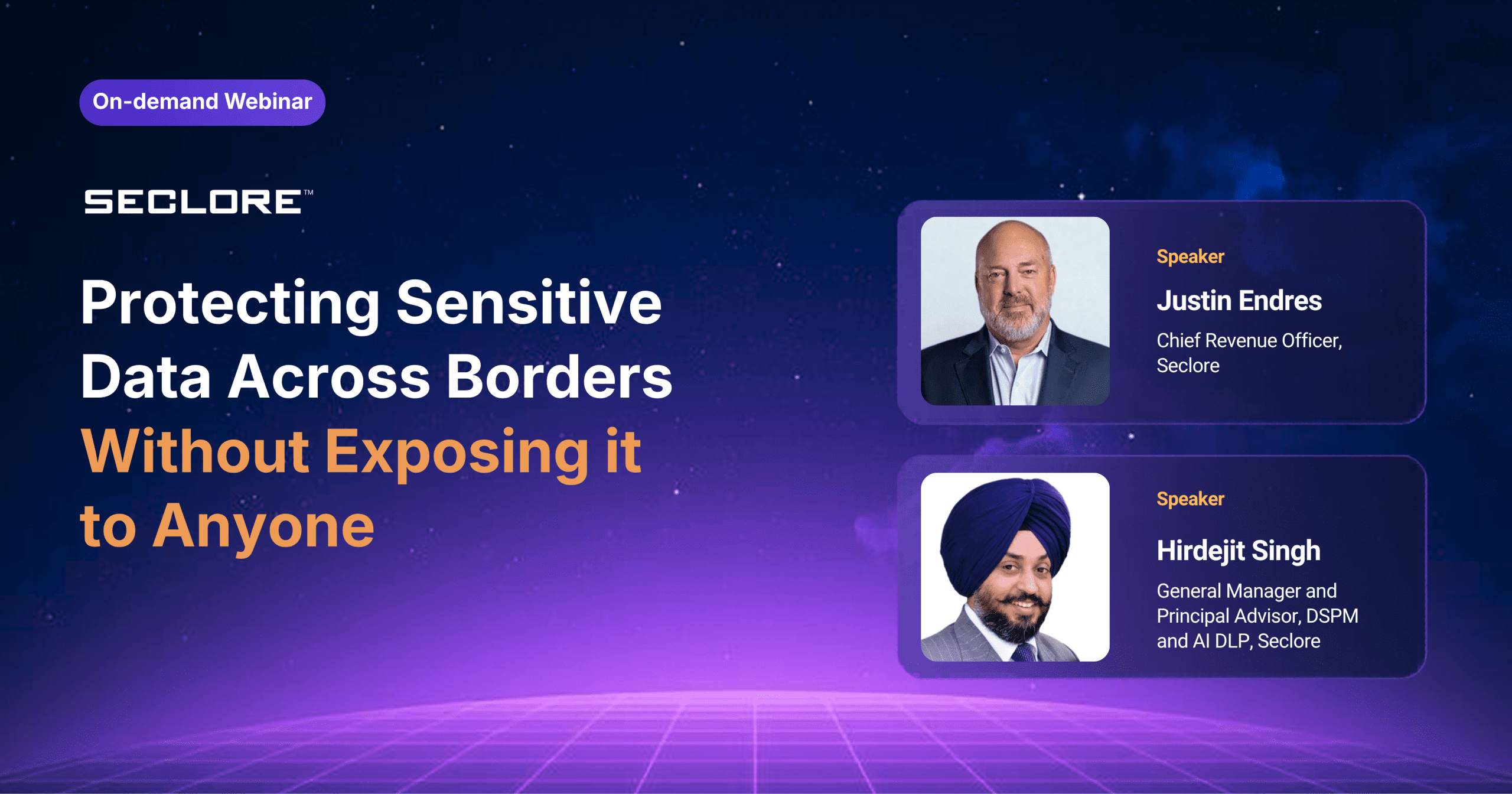
In this on-demand session, Seclore’s Justin (Chief Revenue Officer) and Hirdejit (General Manager and Principal Product Advisor) separate three terms that vendors, RFPs, and even data processing agreements routinely treat as one: residency, ownership, and sovereignty.
What you’ll take away:
- Why passing a residency and ownership audit doesn’t mean your data is sovereign, and the one question most compliance checklists never ask.
- A real scenario: how a hospital’s or bank’s records can sit entirely in-country, be contractually owned by the enterprise, and still get read abroad the moment a DSPM classifies them.
- What the Samsung ChatGPT leak and the US CLOUD Act reveal about how fast “compliant on paper” can fall apart.
- The exact questions to ask any DSPM or AI vendor before trusting them with sensitive data, and why “we can configure that” is the wrong answer.
- What it takes, architecturally, for a DSPM to classify sensitive data without ever reading it.
TRUSTED BY INDUSTRY-LEADING ENTERPRISES