Whitepaper
Understanding India’s Digital Personal Data Protection (DPDP) Rules
A practical compliance and trust blueprint for DPOs, compliance heads, and security leaders who need to turn DPDP obligations into controls they can enforce and prove.
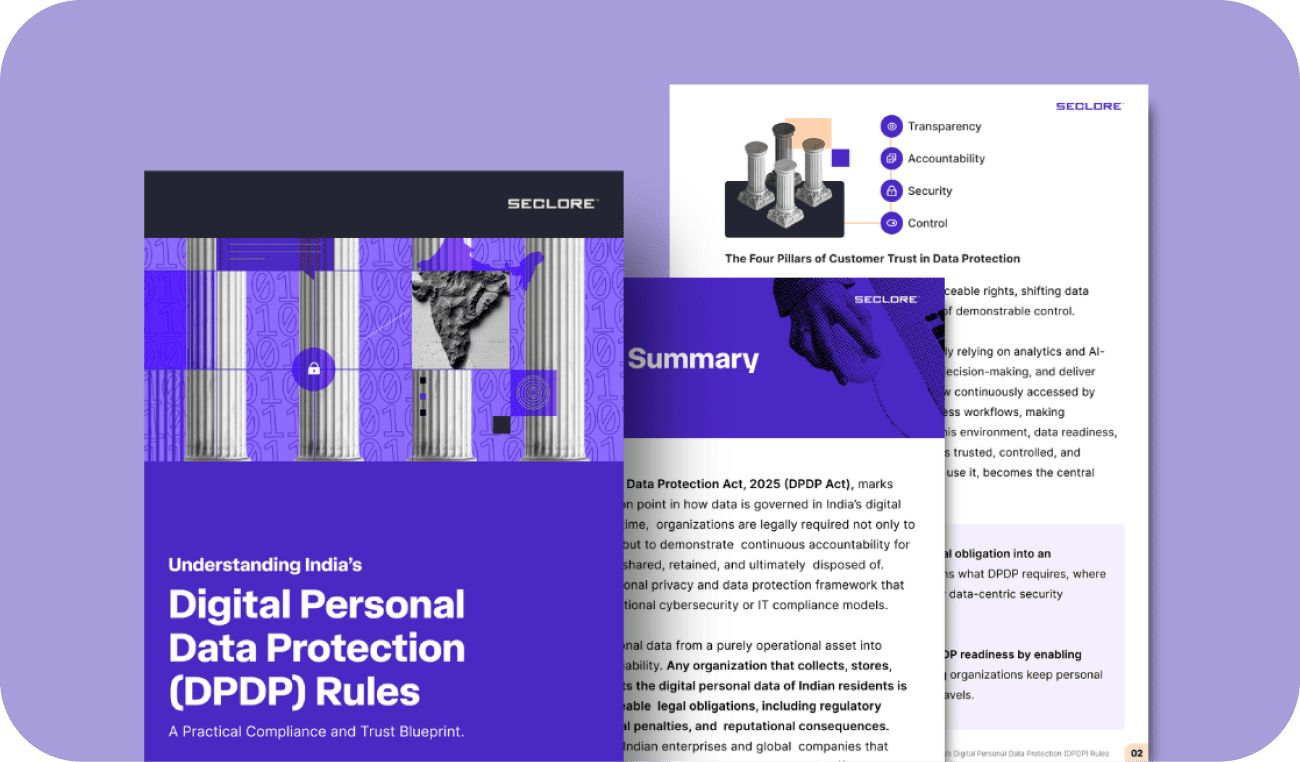
What to Expect

Why DPDP shifts the burden from what you state in policy to what you can technically enforce

Why firewalls, DLP, and access controls stop protecting the moment data moves, or an AI reads it

How to move from assembling evidence during an audit to proving control continuously
Inside the Whitepaper
What the DPDP Rules demand, where organizations fall short, and how to prove compliance in practice.
What DPDP actually changed
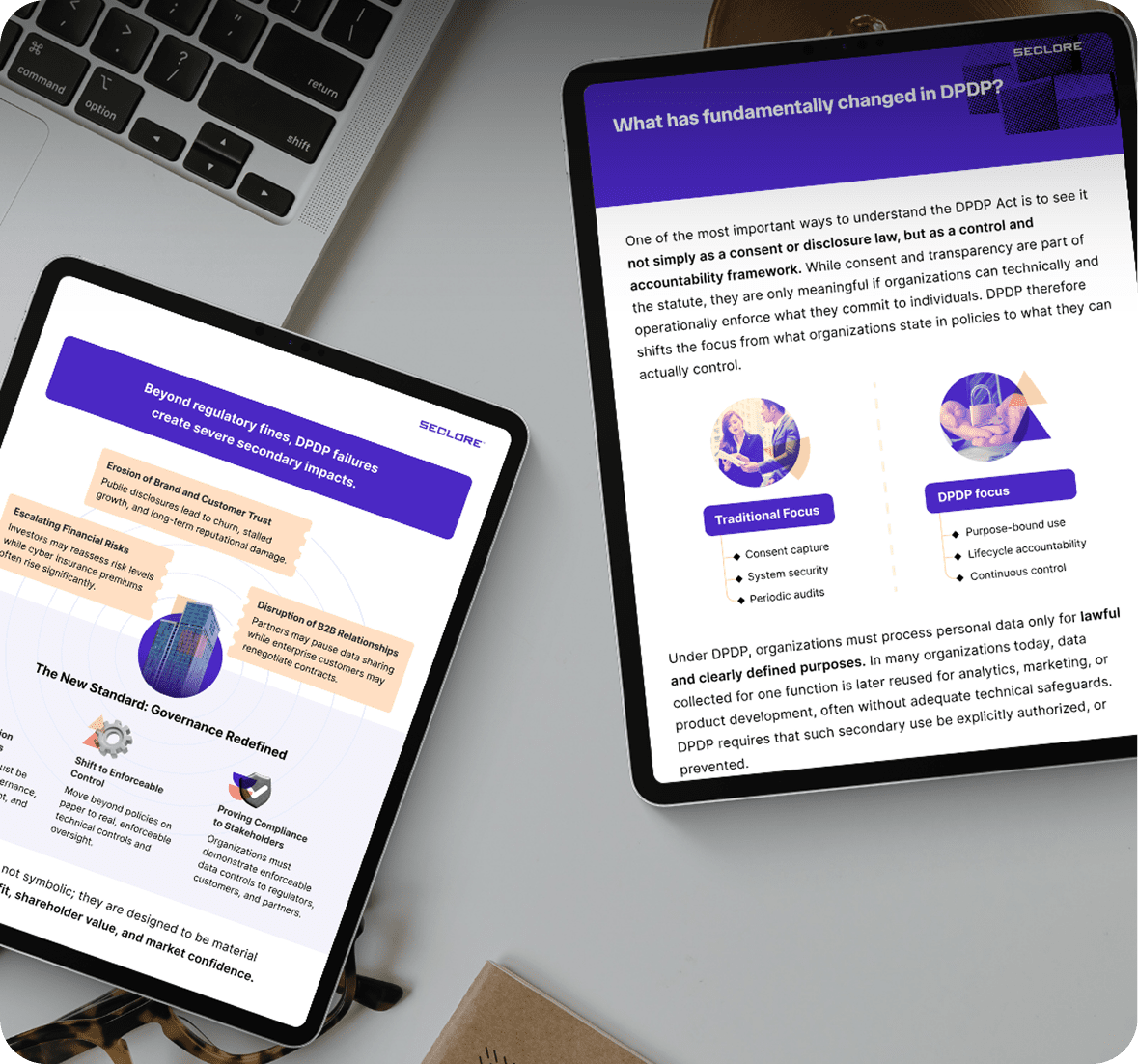
Why the law is a control and accountability framework, not just a consent or disclosure rule.
The rules and the risks
The six enforceable duties of data fiduciaries, and penalties that reach ₹250 crore.
Five structural failures in legacy security
Where firewalls, DLP, and access controls break, each mapped to a specific DPDP obligation.
How AI accelerates DPDP exposure
Why AI copilots and agents amplify existing gaps at machine speed, from purpose limitation to breach scoping.
A readiness model across people, process, and technology
Where organizations sit today, and what separates DPDP-ready from partially ready.
Discovery, classification, and remediation
The three capabilities that turn statutory obligation into operational reality at the data level.
Who should read this?
This blueprint is for the data protection, security, risk, and technology leaders accountable for turning DPDP obligations into controls they can enforce and prove.
1
DPOs and Compliance Heads
Leading privacy governance, demonstrating lawful processing, and preparing for SDF obligations like annual DPIAs and independent audits ahead of enforcement.
2
CISOs and Security Leaders
Accountable for data risk posture, AI governance, and breach readiness under the DPDP 72-hour notification window.
3
CIOs and IT Heads
Integrating AI tools into enterprise architecture while keeping data governance controls intact across cloud, SaaS, and on-prem.
4
Legal and Risk Teams
Interpreting DPDP obligations, managing third-party and vendor accountability, and building an audit-defensible evidence trail.
5
CXOs and Board Members
Carrying ₹250 crore penalty exposure and reputational risk, with the DPO now reporting directly to the board for designated fiduciaries.
Related Resources



TRUSTED BY INDUSTRY-LEADING ENTERPRISES