published on
The Role of Cybersecurity in Industry 4.0: Managing Risks in an Automated Manufacturing Environment

Introduction
Imagine a factory floor where robotic arms assemble products with precision, sensors collect real-time data, and artificial intelligence (AI) constantly optimizes production. This is Industry 4.0—where advanced technologies such as automation, the Internet of Things (IoT), and machine learning (ML) converge to create intelligent, interconnected manufacturing systems.
While Industry 4.0 has revolutionized efficiency and scalability, it has also provided a broader surface for cyber threats. Relying on interconnected systems makes securing data, devices, and operations important. This is not just a technical need; it is crucial for business.
This blog explores the evolving cybersecurity challenges in Industry 4.0, practical strategies to mitigate risks, and how the data-centric approach can safeguard manufacturing environments.
Understanding the Cyber Threat Landscape in Industry 4.0
Impact of Risks on Smart Factories
Smart factories thrive on interconnected ecosystems, where machines, sensors, and software communicate via the Industrial Internet of Things (IIoT). However, this connectivity introduces significant risks that threaten manufacturing operations:
- Operational Disruption: Cyberattacks can halt production lines, disrupt supply chains, and cause costly downtime. For example, a ransomware attack on an IIoT network could bring an automotive assembly line to a standstill, costing millions in delayed shipments and recovery expenses.
- Data Security Breaches: Sensitive operational data—such as proprietary designs and production schedules—can be exposed or stolen during cyberattacks. Beyond fines and legal fees, breaches can lead to increased insurance premiums and long-term damage to competitiveness.
- Reputational Damage: Trust is crucial in manufacturing. Data breaches or operational disruptions can erode confidence among customers and partners, resulting in lost contracts and reduced market share.
As manufacturing processes increasingly depend on digital technologies, neglecting cybersecurity introduces additional risks:
- Safety Hazards: Cyberattacks targeting Industrial Control Systems (ICS) can lead to equipment malfunctions or failures, endangering employees and critical infrastructure. For instance, a compromised robotic system in a factory could cause serious workplace injuries.
- Regulatory Violations: Failure to secure sensitive data can result in non-compliance with regulations like GDPR or industry-specific standards. This can lead to fines, import/export restrictions, and reputational harm, all of which directly impact the bottom line.
Addressing these risks proactively is essential to ensuring operational continuity, regulatory compliance, and the safety of employees and data in smart factory environments.
Key Weaknesses in Manufacturing Cybersecurity
Manufacturing systems encounter a range of distinctive vulnerabilities that can jeopardize their efficiency and security. These vulnerabilities arise from various factors, including the complexity of operations, reliance on automated technologies, and the integration of advanced digital systems. As a result, manufacturers must navigate the following challenges, which can significantly impact productivity and overall performance.
- IoT Devices: In manufacturing, IoT devices often do not have strong security features. They may lack encryption or secure authentication. This makes them easy targets for hackers. These devices can be used as entry points for larger cyberattacks.
- Industrial Control Systems (ICS): Designed primarily for operational efficiency, many ICSs lack modern security protocols. These outdated systems remain exposed to attacks, potentially jeopardizing critical processes and endangering physical equipment and personnel.
- Outdated Software: Legacy systems frequently operate with unpatched vulnerabilities, making them prime targets for attackers. Their incompatibility with modern security tools further increases the risk of exploitation.
- Human Error: Legacy systems frequently operate with unpatched vulnerabilities, making them prime targets for attackers. Their incompatibility with modern security tools further increases the risk of exploitation.
Building a Cybersecurity-First Culture
Effective cybersecurity in Industry 4.0 begins with fostering a culture where employees, processes, and technologies work cohesively to protect the organization’s digital ecosystems. Creating awareness and accountability is paramount in a world where human error is a leading cause of cyber breaches. By integrating security controls during infrastructure design and promoting security-minded behaviors throughout the organization, businesses can minimize vulnerabilities and boost overall resilience.
- Employee Training: Regular training helps employees recognize phishing attacks, use strong passwords, and follow security protocols. Engaging, updated programs empower them to act as the first line of defense against cyber threats.
- Clear Policies: Defined policies on device usage, access control, and secure communication establish consistent practices. These guidelines limit vulnerabilities and ensure employees understand their responsibilities in protecting systems and data.
- Incident Drills: Simulated cyberattacks test response plans, identify weaknesses, and reinforce employee readiness. Drills improve team coordination, ensuring rapid, effective action during real-world incidents to minimize impact and recovery time.
Implementing a Robust Cybersecurity Framework
Developing a Comprehensive Strategy
A successful cybersecurity strategy is built on proactive planning, structured processes, and alignment with organizational objectives. Organizations can strengthen their defenses by identifying risks, establishing clear policies, and integrating security with business goals while fostering innovation.
- Risk Assessments: Regularly assess and evaluate IT and OT systems vulnerabilities to identify potential weak points. Prioritize risks based on impact and likelihood, enabling targeted remediation efforts that protect critical assets.
- Policy Development: Establish clear, enforceable policies addressing access control, data protection, and incident response. Communicate these guidelines effectively and review them periodically to adapt to evolving threats and regulatory changes.
- Alignment with Business Goals: Integrate cybersecurity measures with operational and business objectives. This ensures that security investments support productivity and innovation while maintaining a robust defense against potential threats. Collaboration across teams is essential for success.
Technological Pillars of Cybersecurity
Industry 4.0 brings advanced interconnected systems that improve efficiency and productivity. However, these systems also expand the attack surface, making robust cybersecurity measures critical. The following strategies focus on securing networks, devices, data, and Industrial Control Systems (ICS).
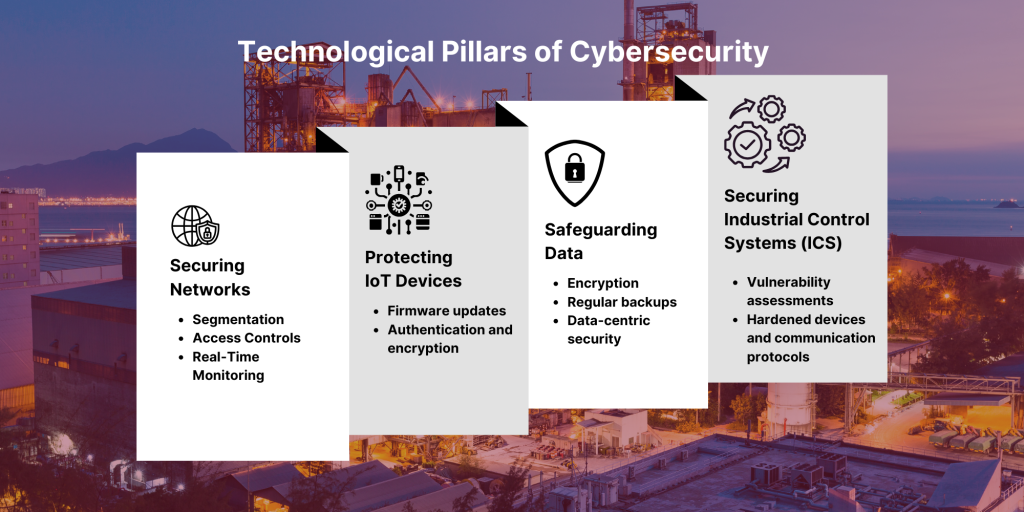
- Securing Networks: Effective network security is the foundation of a robust cybersecurity strategy, preventing unauthorized access and limiting the impact of potential breaches. Key measures include:
- Segmentation: Divide networks into smaller, isolated zones to contain potential breaches. For example, separate IT networks from Operational Technology (OT) systems to prevent cross-contamination during attacks.
- Access Controls: Implement role-based access control (RBAC) to ensure only authorized personnel access sensitive systems. This minimizes insider threats and unauthorized activities.
- Real-Time Monitoring: Use tools such as Intrusion Detection Systems (IDS), Intrusion Prevention Systems (IPS), and firewalls to monitor network activity continuously and respond to anomalies instantly.
- Protecting IoT Devices: IoT devices in manufacturing environments are often entry points for cyberattacks due to their lack of built-in security. Protecting these devices involves:
- Firmware Updates: Regularly update firmware to address known vulnerabilities and protect devices against the latest threats.
- Authentication and Encryption: Use strong authentication protocols, such as multifactor authentication (MFA), and encrypt data transmissions to secure device communication.
- Safeguarding Data: Data is essential in Industry 4.0. Keeping it safe is important for smooth operations and compliance:
- Encryption: Encrypt sensitive data at rest and in transit to prevent unauthorized access during storage or transmission.
- Regular Backups: Schedule frequent backups and store them securely to enable quick recovery in case of ransomware attacks or data corruption.
- Data-Centric Security: Implement solutions like Seclore to protect data even when files are shared externally. Features such as remote revocation and granular access control ensure continuous security.
- Securing Industrial Control Systems (ICS): ICS are critical to manufacturing operations but often need more security features to resist modern threats. Securing these systems involves:
- Vulnerability Assessments: Conduct regular assessments and penetration testing to identify and address potential weaknesses in ICS components like SCADA systems and PLCs.
- Hardened Devices and Communication Protocols: Security-hardened devices and encrypted communication protocols prevent unauthorized access and data manipulation.
Data-Centric Security and Compliance
In Industry 4.0, data is as critical as physical assets, serving as the foundation for operational efficiency, innovation, and competitive advantage. Protecting data from intellectual property to customer information is paramount to ensuring business continuity and compliance with global regulations. A data-centric security approach focuses on securing the data itself, regardless of its location or how users share it.
- Safeguarding Intellectual Property (IP): Sensitive designs, manufacturing processes, and blueprints are valuable assets that must be protected from theft and unauthorized sharing. Solutions like EDRM secure IP through encryption, access controls, and remote revocation.
- Compliance with Regulations: Regulations like International Traffic in Arms Regulation (ITAR) and Export Administration Regulations (EAR) require strict data access and usage controls. Tools like Seclore enable encryption, tracking, and policy enforcement to ensure compliance and avoid legal penalties.
How Seclore Can Help
As manufacturing operations in Industry 4.0 rely heavily on data sharing and collaboration, maintaining control over sensitive information is critical. Seclore’s data-centric security solutions protect sensitive data throughout its lifecycle, regardless of where users store it or how they share it. Seclore empowers organizations to maintain compliance, safeguard intellectual property, and enable secure collaboration by embedding security directly into the data.
- Granular Access Controls: Seclore enforces role-based access, allowing only authorized users to view, edit, or share files. You can tailor permissions for specific users, ensuring sensitive data stays secure during collaboration.
- Audit Trails: Seclore tracks all file interactions, logging who accessed data, when, and how. These audit trails support regulatory compliance and help identify unauthorized or risky shared file usage.
- Remote Revocation: Even after data leaves your network, Seclore allows you to revoke file access instantly. This ensures that unintended recipients cannot misuse or access sensitive information.
By integrating tools like Seclore, manufacturers can reduce data misuse risks and maintain compliance across supply chains and global operations.
Conclusion
Cybersecurity is the backbone of Industry 4.0, enabling innovation while protecting against evolving threats. Manufacturers can protect their operations by using data-focused security tools like Seclore. They should create a culture prioritizing cybersecurity and set up strong security frameworks. This will help them take full advantage of the Fourth Industrial Revolution.
In Industry 4.0, cybersecurity isn’t just about mitigating risks—it’s about securing the future of manufacturing.